24_10

       Remarkable lady,  met her in the 70's 


PUNTA GORDA TOWN, Toledo District, Wed. Oct. 9, 2024

Have you ever wondered who was Maura Lopez?

A big concrete sign at the PG town market bears the name, “Maura Lopez Market”. But few people know much about Maura Lopez and why the market was named after this remarkable Garifuna woman.


Maura Lopez, born August 23, 1948, was the daughter of Patricio Cayetano and Pearl Castillo. She had 10 children in her short 50 years. Her house was the beacon for all the children in the neighborhood. Darnelle Sterling was one of those children. “I learned to do housework, make tortillas, help with laundry. One day she took down the wet clothes that I had hung incorrectly. When I started to leave, she said, ‘If you leave, don’t come back.’” As a child who spent so much of her time at Maura Lopez’ home, she did not leave. Ms. Sterling recalls that Maura made her the woman that she is today. “She insisted that women needed to be able to stand on their own feet,” she said.


“My mother was a Garifuna advocate,” explained Carmen Jane Lopez Avila, 5th child of 10 and former director of the PG Ministry of Education. “She knew all the rituals. She taught the children in the neighborhood how to make the food and started the first Garifuna dance group, Yaguei, otherwise known as Yellow Tail, a bird that is found in Belize whose nest hangs from the tree and has yellow and white feathers.” In her younger years, she had won a scholarship to study dance in Jamaica.

Ms. Maura walked around town, selling fruit from Barranco, homemade conch fritters, soursop juice and baby girls’ clothes that were hand-sewn. Among her other accomplishments, she studied in Belize City to be a practical nurse, worked as a practical nurse at the PG Hospital, and worked briefly buying and selling fish from the Fishing Cooperative. In 1989, wearing a gown of her own creation, she was crowned Miss Elegant Belize and won a free trip to L.A. which she took with her husband, Winston Joseph Lopez.


“My mother was a no-nonsense person, a real go-getter,” her 7th child, Winston Gregory Lopez, recalls. “She was naturally talented and inspired others with the motto ‘Don’t give up.’ She wanted all of her children to have an education and asked us ‘What do you want to do?’ She insisted that no one could live in the house without getting a job or going to school.” Winston went on to be a math and science teacher for many years and principal of Julian Cho High School.

“I want to emphasize a little known side of Maura Lopez,” explained Darnelle Sterling. “She was a healer. During my unexpected last pregnancy, Maura said ‘This happened. Accept it. Count it as a blessing.’ She gave me massages and mixtures for the pain. She took care of me.”

So why was the Punta Gorda market named after this force of nature? Because, as the Mayor at the time, Fern Gutierrez, put it, Maura Lopez was the first entrepreneur of PG!


A Tolkien trail: Where to find the real-life Middle-earth


While Tolkien's stories take place in the fictional realm of Middle-earth, 
the awe-inspiring landscapes of the books, films and TV shows are 
closer than you might imagine.
 
The first book in J R R Tolkien's The Lord of the Rings trilogy, 
The Fellowship of the Ring, was released 70 years ago,
 in the summer of 1954. However, that's not the only 
recent milestone for Tolkien's legendarium: the second season of the epic 
TV series, The Rings of Power, was  released on 29 August 2024.  
 
As befits the ultimate epic fantasy series, the settings are gorgeous, 
ranging from bucolic, rolling countryside to plunging valleys and desolate deserts. 
And while Tolkien's stories take place in the fictional realm of Middle-earth,
 the awe-inspiring landscapes of the books, films and TV shows are not as
 otherworldly as you might imagine. Many of them are based on 
real-world locations and visiting them brings to life both the landscapes 
themselves and the imaginary worlds they inspired Tolkien to create.
 
The Tolkien Trail: Lancashire, England
While writing The Lord of the Rings in the 1940s, 
Tolkien lived for a while at Stonyhurst College, a prestigious 
boarding school in Lancashire where his son was a teacher. 
The elder Tolkien was known to walk often through
the woodlands and rolling hills of the surrounding Ribble Valley, 
and is thought to have taken inspiration from the place while 
creating the Shire, the rural homeland of the hobbits


Today, fans can explore the area on the Tolkien Trail, which opened in 2002 

and takes hikers through the very landscapes that inspired the author.

The route starts in the village of Hurst Green at the atmospheric

17th-Century Shireburn Arms pub, where Tolkien was a regular. 

It then winds for around seven easy miles through undulating farmland, 

past the grand buildings of Stonyhurst College, and across

 historic landmarks like Cromwell's Bridge, an overgrown packhorse

 bridge once used by Oliver Cromwell in the English Civil War.


Although Tolkien didn't directly document the influence of places along the trail, 

there are several sources of likely inspiration. 

The route passes the stately home Hacking Hall where,

 during Tolkien's time, there was a wooden ferry barge, 

the Hacking Ferry, that carried people across the River Ribble. 

In The Fellowship of the Ring, the Bucklebury Ferry 

(also outside a stately home, Brandy Hall) carries the hobbits across the Brandywine River

 in similar fashion while they are fleeing a fearsome spectral horseman.


The local landowning family near Stonyhurst, meanwhile, 

were called the Shireburns – and the similarly named River Shirebourne 

appears in Tolkien's geography of Middle-earth. Tolkien's maps, meanwhile, 

depict the convergence of three rivers – the Shirebourne, Withywindle and Brandywine

 – in a way that exactly mirrors the meeting of the Hodder,

 Ribble and Calder rivers here in Lancashire. In addition, 

St Mary's Church in the nearby village of Newchurch-in-Pendle

 bears an unusual feature: an eye-shaped carving halfway up the tower,

 known as the Eye of God, which resembles the all-seeing

 Eye of Sauron from the Lord of the Rings books and movies


Cheddar Gorge: Somerset, England

Most of the real-life places associated with Tolkien's imaginings of Middle-earth are

 based on educated guesswork, but there is one place that the writer himself 

confirmed as a real-life inspiration for The Lord of the Rings.

Tolkien and his wife Edith married in 1916, and honeymooned in the 

Somerset village of Clevedon. While they were there, they paid a visit to 

one of the most jaw-dropping landscapes in Britain: Cheddar Gorge, 

a sheer limestone valley, pockmarked with caves whose walls are bejewelled 

with intricate rock formations, stalagmites and stalactites.

The honeymooning author – always married, at least in part, to his work – 

was taking notes, and in 1971 he confirmed in a private letter

(published in 1981 as part of The Letters of J.R.R. Tolkien)

 that the caves of Cheddar Gorge inspired the Glittering Caves of Helm's Deep in The Lord of the Rings.


Visit Gough Cave, the most famous of the caves at Cheddar, and you'll likely

 recognise elements of Tolkien's description of the Glittering Caves: 

"columns of white and saffron and dawn-rose … fluted and twisted into dreamlike forms".   

Stow-on-the-World: Gloucestershire, England

Tolkien was a deeply religious man, and although he always refuted the 

theory that The Lord of the Rings was a Christian allegory, the work is infused with spirituality. 

Tolkien spent his professional life as a professor at the University of Oxford, and he was known 

to have often visited the nearby Cotswolds, a picturesque area of golden-stone villages, 

gently rolling hills and seriously photogenic churches.

One of those churches, St Edward's Church in the market town of Stow-on-the-Wold, 

has long been earmarked as a likely source of inspiration for Tolkien.

 Its north door is among the most photographed doors in the country: carved from heavy, studded wood, 

crowned with an arching architrave and hung with an oil lamp.

 Its most striking feature is the two yew trees that flank the doorway, planted three centuries ago and now huge,

 twisted and gnarled, having grown into the structure of the church itself.

Tolkien accompanied his writings with beautiful hand-drawn artworks, one of which depicts the Doors of Durin,

 a hidden entrance to the inside of a mountain that harbours the Dwarf city of Khazad-dûm.

 Tolkien’s drawing, although stylised, is almost identical to the north door of St Edward's Church, 

from the trees that bookmark the entrance to the lamp that hangs above it – 

giving rise to the longstanding rumour that this is where he found inspiration for his mythical mountain doors.

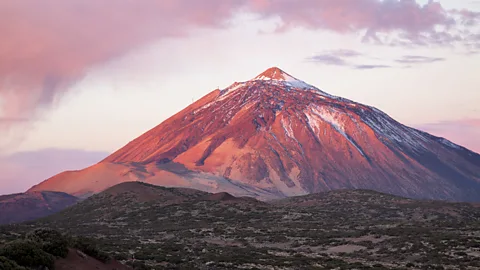
Getty Images Teide in Tenerife was selected as the real-life setting for the realm of Rhûn (Credit: Getty Images)Getty Images
Teide in Tenerife was selected as the real-life setting for the realm of Rhûn (Credit: Getty Images)

Teide National Park: Tenerife, Spain

The moon-like deserts of Tenerife feature prominently in the new series of The Rings of Power,

 as a barren wasteland through which the mysterious Stranger, a wizard who has lost his memory, 

is travelling with two hobbits. Tenerife's Indigenous Guanche people traditionally believed that Teide 

was the gateway to the underworld domain of malevolent deity Guayota – and it's not hard to see why,

with its fierce winds, searing heat and dusty plains dotted with gnarled, skeletal trees. It's unsurprising 

that Teide was chosen as the real-life setting for the realm of Rhûn, which, in Tolkien's works, 

is a mysterious region of moral corruption and dark sorcery.

Mount Teide is an active volcano (it hasn't erupted since 1909) and volcano treks are a popular activity in the park – although there is also a cable car if you're feeling less adventurous.

Getty Images Fiordland in New Zealand’s South Island was chosen to represent some of the wildest parts of Middle-earth (Credit: Getty Images)Getty Images
Fiordland in New Zealand’s South Island was chosen to represent some of the wildest parts of Middle-earth (Credit: Getty Images)

Fiordland: South Island, New Zealand

The entire The Lord of the Rings film series was famously shot in New Zealand,

 the homeland of director Peter Jackson. The rivers and woodlands of Fiordland – 

a region of green-sloped, snow-capped mountains that plunge to glacier-carved inlets, known as "sounds" 

 feature prominently in the movies. This is New Zealand's most unspoilt and biodiverse region,

so it's no surprise Jackson chose it to represent some of the wildest parts of Middle-earth.

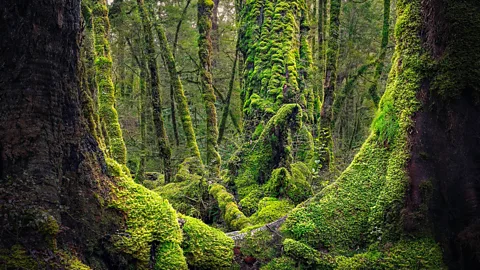
The woodlands of Fiordland doubled as Fangorn Forest, home to the mysterious Ents: 

giant talking trees who help the hobbits in their fight against the dark wizard, Saruman. 

Other Fiordland locations that appear in the films include the Waiau River,

 which stood in for Tolkien's River Anduin, the longest river in Middle-earth,

that appears in the very first aerial shot of The Fellowship of the Ring.

To explore Fiordland, most visitors base themselves in the lakeside town of Te Anau,

 home to a wide range of hotels, restaurants and tour operators leading

 hiking and boating trips into the Fiordland National Park.


24_08

 An idiot’s guide to drinking whisky — except I’m the idiot 

By Lesego Chepape

Alchemy: Bill Lumsden, Glenmorangie’s director of distilling, whisky creation and whisky stocks, is in South Africa to launch the brand’s Triple Cask Reserve. Photos: Supplied

As we are having dinner at the Patat Restaurant, at the charming Swartberg Country Manor, an upmarket lodge outside Oudtshoorn, I pick up a sense of contentment.

There is a fire roaring in the hearth of this rambling farmhouse, built in 1864, and we are a small group of media hacks on this marvellous freebie, being pampered with delicious food and fine whisky.

But I keep noticing the avuncular Bill Lumsden, Glenmorangie’s director of distilling, whisky creation and whisky stocks, taking anxious glances at his phone. I ask him what the problem is.

“Rangers are playing — and they have not scored a goal yet,” he replies, with genuine concern, in his Scottish burr.

I glance over at his screen and see that his Glasgow team is playing the Ukrainian club Dynamo Kyiv.

I don’t know much about football — other than the tension Kaizer Chiefs and Orlando Pirates cause in my household.

After some conversation around the table about the two teams, I figure out that this game is important for Dr Bill (as everyone calls him), seeing it is a Uefa Champions League qualifier for the Gers.

After a few glasses of whisky had given me some liquid courage, I offer up a prayer.

Lo and behold, Rangers score a few minutes after my powerful plea, drawing in the dying minutes of the match. I now know what I will be doing in my retirement.

However, that’s not why I had the pleasure of meeting Dr Bill, who holds a PhD in biochemistry and is renowned for his ability to create fascinating new flavours in single malts, using inventive cask finishes.

He is in South Africa to launch the Glenmorangie Triple Cask Reserve.

The name is self-explanatory — it is made from three barrels, a method that is rarely used in the Scotch whisky industry.

“There are two or three reasons for that. The least sexy answer is that I actually had quite a lot of these barrels in my stock profile which I kept for a rainy day,” Dr Bill tells us.

“Then, when I started to think more seriously about the product, I was wanting something to be an entry-level Glenmorangie. A Glenmorangie that was going to be at a more accessible price point.

“I thought that this would be for people who are maybe not whisky experts and are more likely to be making cocktails or adding soda.”

He says, for that reason, he wanted to make something more full-bodied.

“The new charred-oak barrels and the rye whisky barrels are more flavoursome than my normal bourbon barrels and that’s the reason why I used them.”

While I am an enthusiastic whisky drinker, I am not the glass-tilting, deep-sniffing type.

So, when I am sitting at a table with proper whisky drinkers, I panic a bit. I know that I have to observe and do as they do. And, just by observation, I think I might have figured out whisky drinking.

First, take a moment to appreciate the colour. Hold the glass up to the light and pretend you know what you’re doing.

Next, give it a gentle swirl. This releases the aromas, which is what the pros call the “nose”.

Stick your nose in the glass and take a sniff. You might pick up notes of caramel, vanilla or oak — or maybe it just smells like alcohol. That’s okay, too.

Finally, take a sip. Let it roll around your mouth before swallowing. You’ll likely feel a bit of warmth in your throat, which is part of the experience.

Try to pick out flavours, even if they’re vague.

“Hmm, I’m getting hints of vanilla and spice,” you might say. No one needs to know you’re just guessing.

To be honest, with the Glenmorangie Triple Cask Reserve, there were spicy notes and some fruity ones that I picked up after tasting it a couple of times.

It was delicious, and what makes it more special is the fact that it works itself perfectly into cocktails, preserving its bold notes.

One wonders how Dr Bill balances traditional whisky-making methods with modern innovations.

“I never allow myself to be handcuffed by tradition but I respect tradition. I try to do different things while still sticking broadly to the old-fashioned principles of whisky-making,” he says.

“It is about balance and I am finding more and more these days that your typical malt whisky consumer, who will generally be more knowledgeable about whisky than maybe a blended Scotch whisky drinker, they are constantly looking for something new and something different.

“If you become too old-fashioned and too traditional, and never want to do anything interesting, then your brand will become irrelevant to these people,” he says.

Whisky culture can feel like a secret club but there are a few basic etiquette tips I learnt at the table to keep in mind.

First, don’t chug your whisky. This isn’t a varsity party; whisky is meant to be sipped and savoured.

Second, don’t be afraid to ask questions. People who love whisky usually enjoy sharing their knowledge, and you might learn something useful.

Finally, avoid being too pretentious. No one likes a whisky snob — especially one who’s still learning the ropes.

“I think people sometimes take Scotch malt whisky a little bit too seriously and it’s great to show reverence toward it — it is an expensive luxury product — but, more than anything else, it should be fun.”

Those words from Dr Bill put me at ease, the panic subsides and I am ready to enjoy the whisky.

Having spent a bit of time with Dr Bill, who has a career spanning almost 40 years, you realise how much he cares about the craft.

“My long-suffering wife realises that I am not really married to her, I am married to Glenmorangie. Glenmorangie is my first love.

“I am in a very responsible position of being the current guardian of the quality and character of Glenmorangie.

“I want people to remember me with smiles on their faces and say that Bill made whisky but he was a lot of fun as well.”

In the end, whisky is meant to be enjoyed, not stressed over. Sure, there’s a lot to learn, and you might feel out of your depth at first, but that’s part of the fun.

Embrace the journey, make mistakes and don’t take yourself too seriously. With a little practice, you’ll go from whisky idiot to whisky enthusiast in no time — just like I’m doing. Tags: Dr Bill Lumsden, friday, Glenmorangie Triple Cask Reserve, rangers, South Africa, Whisky


                   PAYASOS RUSOS


                              https://youtu.be/3eTuD5gB7X8

24_07

 RUGBY

PHATASS EDITORIAL

THE ONLY TRUE FIELD SPORT LEFT ---- EXCITING TO WATCH BOTH THE

WOMAN AND MEN TEAMS – SIMPLY AMAZING TO VIEW WITHOUT ALL

THE CORRECTNESS THAN HAVE RUINED ALMOST EVERY SPORT OF THE

DAY. BASEBALL IS WATCHING THE GRASS GROW PLUS THE EXCITING

CROTCH ITCH; FOOTBALL HAS TO MANY RULES AND PENALTIES THE

CAN BARELY NOW ENCOURAGED PREVAILS, MOVE WITHOUT A FLAG; BASKETBALL

WHERE CONTACT, TRAVELING AND PALMING THE BALL ARE ACCEPTABLE

AND NOW REPRESENT GANG BANGER BALL; DON’T FORGET SOCCER IS EQUAL

TO BASEBALL BUT MORE ATTUNED TO WIND SPRINTS EXERCISE AND LAST WAY TOO

LONG. DON’T FORGET THAT POLITICAL CORRECTNESS COUNTS MORE THAN THE

SCORE

RUGBY IS ALIVE AND WELL AND WE ARE FORTUNATE THERE ARE COLLEGE

TEAMS IN TIJUANA, ENSENADA AND MEXICALI – STOP PANDERING THE CRAP

PROFESSIONAL LEAGUES. GO EXPERIENCE THIS REFRESHING SPORTING EVENT

EVEN THE WOMAN TEAM AND ALL THE BARBIES END UP BRUISED AND

BANDAGED ALONG WITH THE MEN TEAMS


Copy and paste the link to see the video

https://www.rugbypass.com/news/avenging-painful-france-defeat-would-cap-phenomenal-season-for-steph-else/